The first morning, I left Weston at 5:45 AM with 92% on the battery and a quiet prayer about I-95.
My new Ford Mustang Mach-E was the variable I hadn't fully accounted for when I agreed to present at Seatrade Cruise Global 2026 — an hour and forty-five minutes of Miami-to-Miami Beach traffic each way, four days in a row, each trip now needing to account for state of charge, charging station availability, and whether I'd have time to top up before the drive home. It is a strange thing to love a car and also spend the week doing range math on it.
This one was different in a way that matters for a gear post: I wasn't walking the floor as an attendee. My company had a booth. I was the one running live 3D ship demos showing AI agents monitoring shipboard operational technology to an audience of cruise line executives and ecosystem partners. When your laptop is the working surface of your pitch, your gear stops being conveniences and starts being infrastructure.
Here's what held up. And one cable that nearly sank me on the final day.
The show, briefly
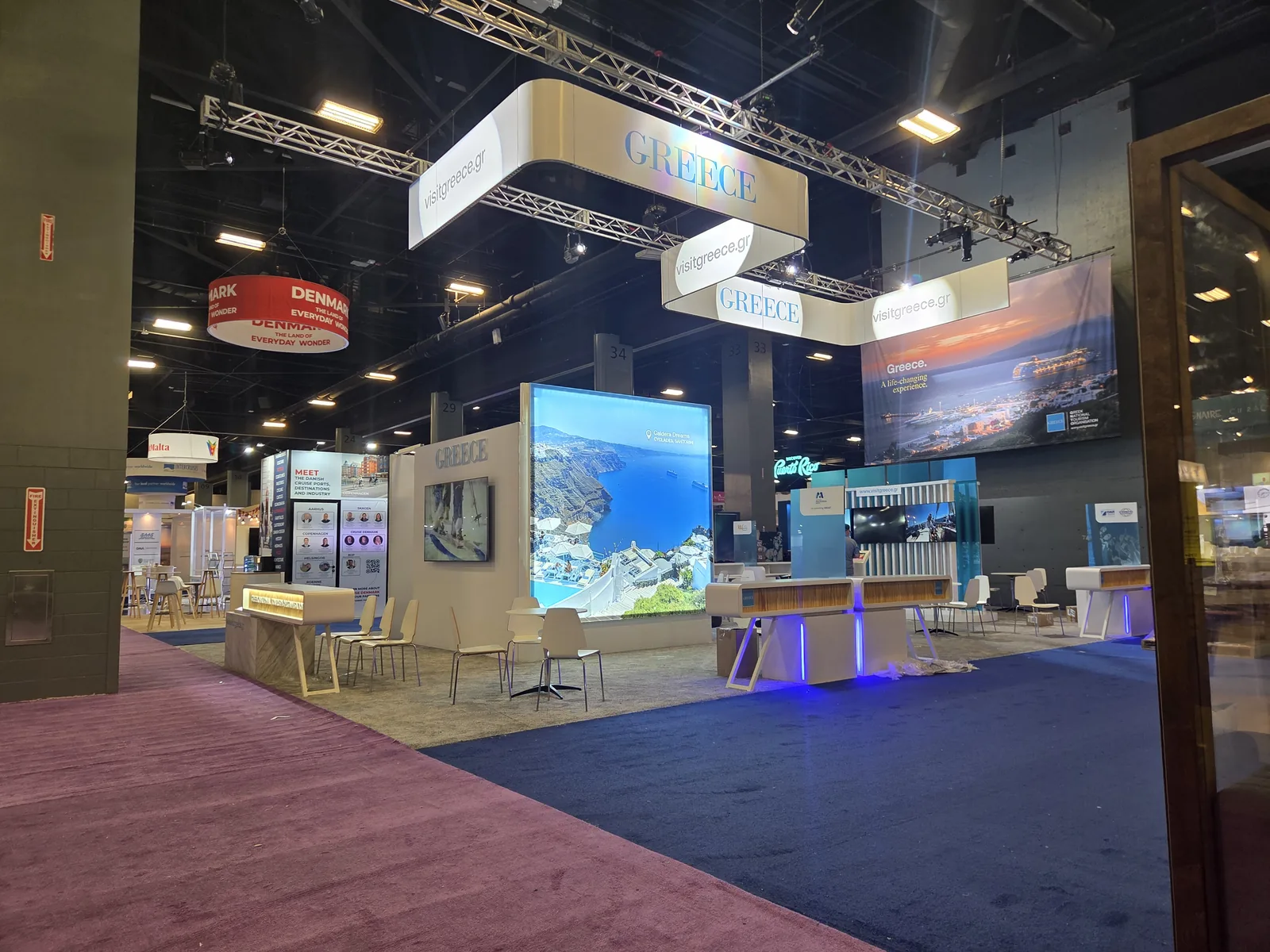
Seatrade Cruise Global is the cruise industry's annual gathering — forty-first edition, held at the Miami Beach Convention Center from April 13 through 16. Six hundred and fifty exhibitors, more than ten thousand attendees, sixty-plus hours of sessions. The entire global cruise line executive class in one building for four days.
For those of us who've worked inside this industry — I spent five years architecting the Cloud Business Office at Carnival Cruise Line, and time before that at Royal Caribbean Group — Seatrade is a reunion as much as a conference. You recognize vendor logos from decade-old integration projects. The industry is smaller than it looks from the outside, and Seatrade is where that becomes obvious.
Day one: the drive in
The Mach-E made it. Barely.
Driving an EV to a multi-day conference when you live ninety minutes away changes your morning routine in ways non-EV drivers don't fully appreciate. I timed my departure not for when I wanted to arrive, but for when the charger would release me. Every day started with a look at the app and a small internal negotiation between my schedule and my battery.
Parking at the Miami Beach Convention Center during Seatrade is a combat sport. On Monday I arrived forty minutes before booth setup needed to start, which turned out to be exactly enough.
What I was carrying
Because I was presenting, the gear had to do double duty: demo infrastructure by day, portable workstation by night. The core stack, in order of how often I reached for it:
The Puerto Rico booth
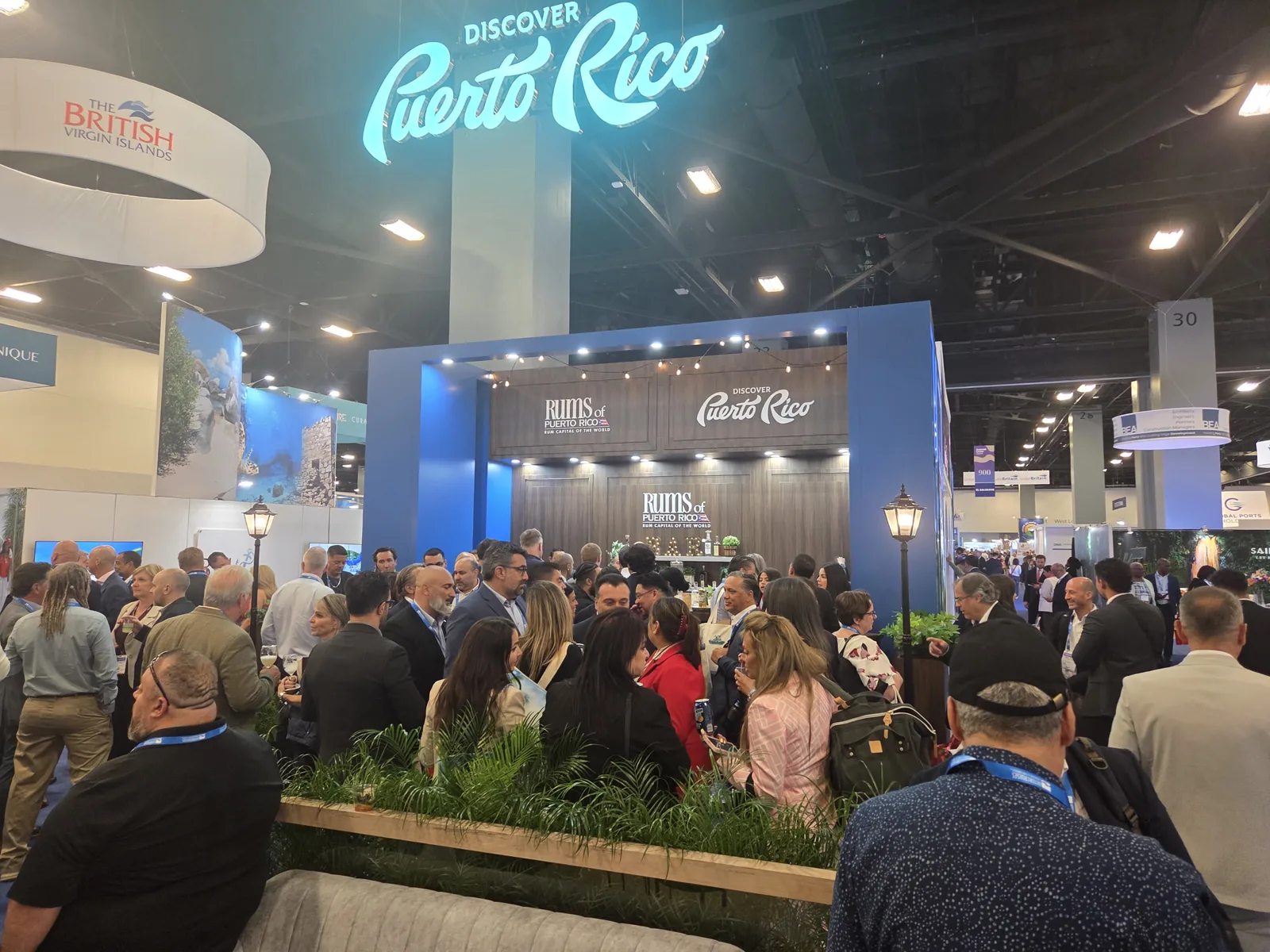
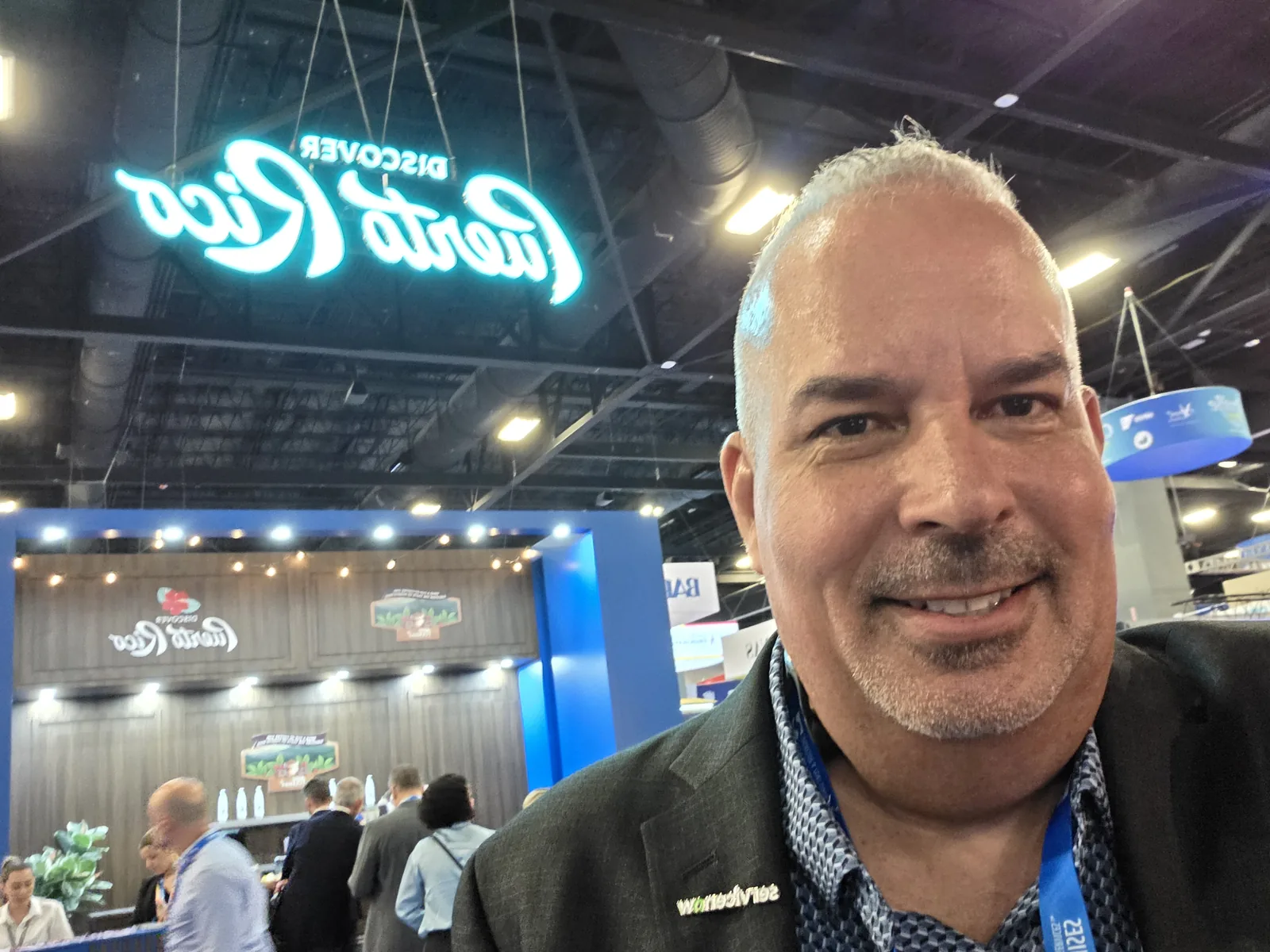
I was born and raised in Puerto Rico. I spent two decades of my career there — IT Director roles across Tren Urbano, a financial regulatory agency, a hospital network, the wireless carrier that became part of AT&T. Walking into Seatrade and finding Puerto Rico with a full-scale booth — a neon Discover Puerto Rico sign overhead, a Rums of Puerto Rico bar pulling a crowd, my island courting the cruise lines of the world — I had to stop.
I had to try the Bad Bunny drink. I'm not going to pretend otherwise.
The near-disaster
Thursday, the final day. Somewhere around Hollywood on I-95 southbound, I realized what I'd done.
I had left both of my USB-C to USB-A cables at home on the kitchen counter. Packed the night before, set aside, forgotten when I grabbed the rest of the kit at 5:30 AM in the dark.
The booth's display system needed that configuration for the full demo. Turning around meant three hours round-trip, a missed morning, and a battery state of charge that would absolutely not support it. First demo was in ninety minutes. I spent a mile of I-95 doing the panicked mental inventory of a grown man who knows he's about to fail his own team.
Then I remembered the Anker two-pack in the tote. I always travel with two USB-C to USB-C cables. And because the power bank supports USB-C passthrough, one of those cables, chained through the power bank's built-in USB-A connector, got me the signal path I needed.
Redundancy saved me. Carrying two of the same cable saved me. A power bank with the right mix of ports saved me.
That's the whole lesson of conference gear: the thing that matters isn't the best cable, it's the second cable. Buy two. Pack two. I will die on this hill.
The booth's cheap extension cord
Related story. Our booth's electrical connection was a cheap extension cord that the venue had supplied — the kind of thing you'd hesitate to trust with a lamp, much less a laptop running GPU-intensive 3D visualization for eight hours a day. On Day 3 it dropped the laptop twice. Not a brownout — an actual disconnection.
The power bank saved me. I stopped trusting the cord, ran the laptop off the bank with the wall as trickle-top-up, and the demos ran. I think about gear the way an architect thinks about systems: what's my failover when the thing I'm supposed to trust stops being trustworthy? In Miami, in the back of an Uber, anywhere — the answer is usually the power bank.
The sessions that signaled 2026
Between booth shifts, I made it into four or five sessions. A few worth naming:
The AI Bubble: Boom or Bust? The one I'd circled before I arrived. The cruise industry is pouring significant investment into AI right now, and the honest debate about what's durable and what's vapor was overdue. The most grounded voices were the people who'd already shipped something; the shakiest were the ones still pitching.
The BlueTech Leap covered maritime sustainability and next-generation propulsion. The throughline: cruise lines are no longer treating environmental tech as a cost center — it's being positioned as brand equity. Meaningful shift.
Safe and Sustainable Shipbuilding was the deep-industry session. Not the flashiest panel at Seatrade but possibly the most consequential — the next generation of cruise vessels is being designed right now.
The drive home
Thursday evening, the Mach-E and I made the drive back to Weston with 34% remaining and a podcast I'd been saving. I'd presented to more cruise industry executives in four days than I'd met in the previous year combined. The laptop held up. The cables held up, including the ones that shouldn't have had to. The shoes were slightly wrecked. The umbrella had earned its spot in the bag.
Next year's kit gets one upgrade: a second power bank. Redundancy, remember.
The gear, one more time
If you only take four things from this post:
- Two of every critical cable. Not one; two.
- A power bank with USB-C passthrough and built-in cables. Primary infrastructure, not backup.
- A laptop whose battery actually survives a full working day untethered. Rarer than spec sheets suggest.
- Shoes that can absorb six miles of convention center concrete without advertising that fact.
Everything else is optimization. Those four are the foundation.